Changes to Federal Direct Loan Eligibility for the 2026–2027 Academic Year
- Why am I receiving this notice?
The One Big Beautiful Bill Act (OBBBA) changed how annual Federal Direct Loan eligibility is determined for students who enroll less than full-time. These federal changes became effective July 1, 2026, and apply beginning with the 2026–2027 academic year.
- What changed?
Previously, students who were enrolled at least half-time were generally eligible to receive their full annual Federal Direct Loan amount.
Beginning with the 2026–2027 academic year, students who enroll less than full-time will receive a reduced annual Federal Direct Loan amount based on their enrollment intensity using the federally required Schedule of Reductions.
- What is enrollment intensity?
Enrollment intensity refers to the number of credit hours you are enrolled in compared to full-time enrollment.
- Undergraduate full-time enrollment: 12 or more credit hours
- Graduate full-time enrollment: 9 or more credit hours
The closer you are to full-time enrollment, the greater your Federal Direct Loan eligibility may be under the federally required Schedule of Reductions.
- Can I receive Federal Direct Loans if I am enrolled less than half-time?
No.
Students enrolled in fewer than 6 credit hours are not eligible to receive Federal Direct Loans.
- What is considered half-time enrollment?
For most students:
- Undergraduate students: 6 or more credit hours
- Graduate students: 6 or more credit hours
Students must be enrolled at least half-time to qualify for Federal Direct Loans.
- Why was my Federal Direct Loan amount reduced from what I was originally awarded earlier this year, and how does my enrollment affect my loan eligibility?
Financial aid offers are initially prepared based on the assumption that students will enroll full-time. After the Add/Drop period, Virginia State University is required by federal law to review your actual enrollment. If you are enrolled less than full-time, your annual Federal Direct Loan eligibility must be reduced based on your enrollment intensity using the federally required Schedule of Reductions. As a result, your loan amount may be lower than what you were originally awarded. This adjustment is required by federal law and applies to all institutions that participate in the Federal Direct Loan Program.
- How will Virginia State University determine my final loan amount?
When financial aid is initially offered, the university assumes students will enroll full-time.
After the Add/Drop period ends, the Office of Financial Aid must review your actual enrollment and adjust your Federal Direct Loan eligibility, if necessary, to comply with federal regulations.
- Will my Pell Grant be affected?
The federal Schedule of Reductions applies specifically to Federal Direct Loans.
However, Pell Grants and other federal, state, institutional, or private financial aid programs may have separate enrollment requirements. If your enrollment changes, your eligibility for those programs may also change based on their individual rules.
- Will my scholarships be reduced?
Some scholarships require students to maintain full-time enrollment or meet other eligibility requirements.
If your enrollment changes, your scholarship eligibility will be reviewed according to the requirements of that specific scholarship program.
- What happens if I add or drop classes?
Changes to your enrollment may affect your financial aid eligibility.
After the Add/Drop period, the Financial Aid Office will review your enrollment and make any required adjustments to your financial aid package in accordance with federal, state and institutional policies.
- How can I maximize my Federal Direct Loan eligibility?
To receive the maximum annual Federal Direct Loan amount available to you:
- Enroll full-time whenever possible.
- Meet all federal financial aid eligibility requirements.
- Complete any requested financial aid documentation promptly.
- Where can I find my updated financial aid offer?
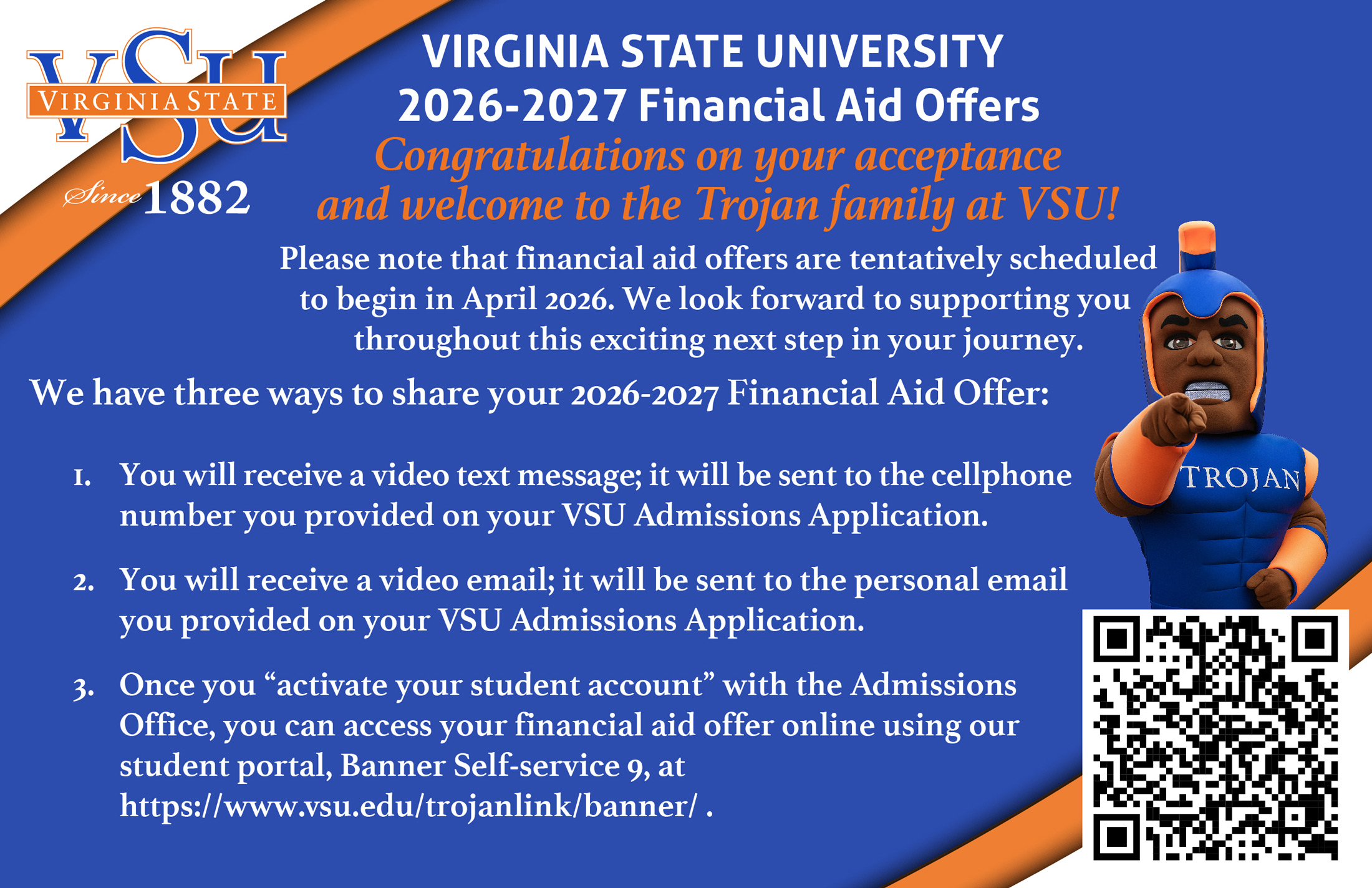
You can view your financial aid award by logging into Banner Self-Service.
If adjustments are required because of your enrollment, your financial aid offer will be updated after the Add/Drop period.
- Who should I contact if I have questions?
If you have questions about how these federal changes affect your financial aid, please contact:
Virginia State University
Financial Aid Office
📧 Email: finaid@vsu.edu
📞 Phone: (804) 524-5990
Our Financial Aid Team is here to help you understand your options and support your educational goals.